Joseph Beuys
“Beuys’ use of a dead hare, felt, honey, gold, iron, bones, and electrical components are not demonstrations of materials, nor are they narrative elements. Beuys wanted to call into attention the limits of a rationalist worldview, one which no longer offers the ability to communicate with animals the way the ancients did. […] This ‘surrendering to the animal’ implies a breakdown of separation between man and animal, which calls out directly to the idea of animistic thought and shamanism.” – Greg Delapaix

Woman/Animal Skull (1956-57), Oil pigment, ink, turpentine and pencil on paper 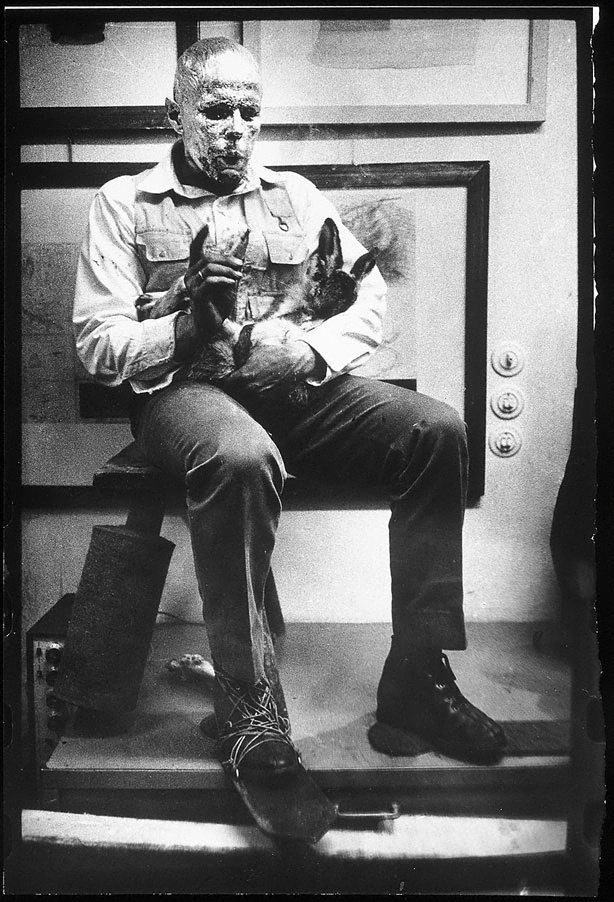
How to Explain Pictures to a Dead Hare (1965), Gold leaf, honey, dead hare, felt pad, iron, fir tree, miscellaneous drawings and clothing items 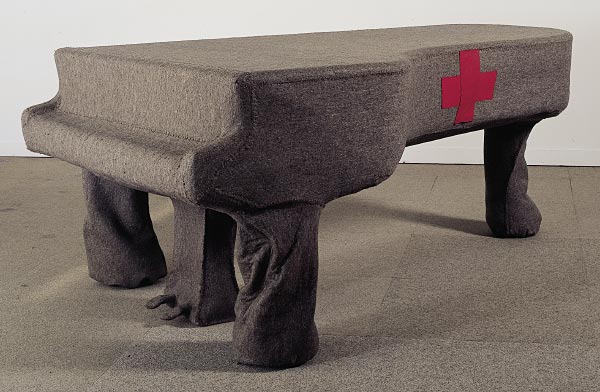
Homogenous Infiltration for Grand Piano (1966), Grand piano, felt 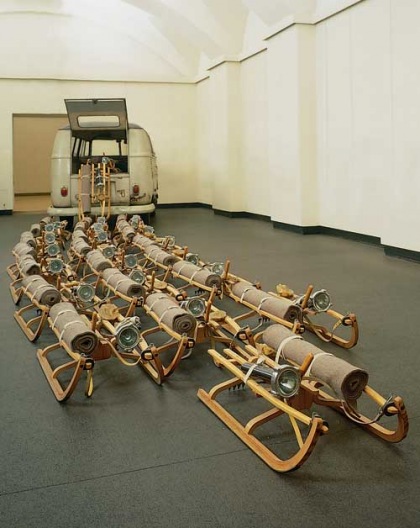
The Pack (1969), Volkswagen Bus (1961), 20 wooden sleds, each equipped with fat, rolled-up felt blanket, rope, flashlight, and leather belt 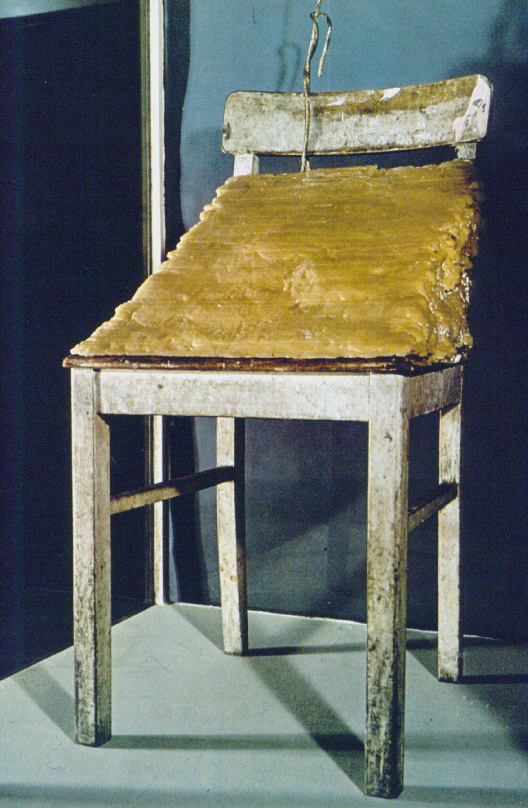
Fat Chair (1964-85), Wood chair, animal fat
Subject Vs. Content: How to Explain Pictures to a Dead Hare (1965)
In Beuys’ piece, How to Explain Pictures to a Dead Hare, Beuys sits with his face covered in honey and gold leaf, all the while holding and caressing a dead hare. In his original performance, the artist caressed the animal and whispered to it explanations of his art. A piece of felt is strapped to one foot and a piece of iron is strapped to another. Beuys’ art is posted behind him, and a small fir tree is just out of view of this picture.
Through this performance, Beuys seems to be demonstrating to the audience a relationship between the hare and himself. Much of Beuys’ work emphasizes concepts found in shamanism, a practice involving various states of consciousness, spirituality, and connections with the earth and its animals. As stated by critic Greg Delapaix, “Beuys wanted to call into attention the limits of a rationalist worldview, one which no longer offers the ability to communicate with animals the way the ancients did.” All of the items in the image emphasize major parts of life including life itself, death, spirituality, money, and technology. Perhaps, through this piece, Beuys’ calls out the growing gap between humans and the natural environment.
Relevance
I chose to analyze this piece because it focuses on an idea that I find fascinating. Much of Beuys work, including this piece, calls out the growing divide between humanity and the spiritual, less rational world. I believe that in life, nothing at all can be concrete and we can never be completely sure of anything. The artist steps back in this image to question the increasingly rational world. Beuys takes time with this piece to consider his and our relationship with the external world and the uncertain worlds of nature and spirituality.
 David's Blog